In the final years of Jeffrey Epstein’s life, one of the people closest to him in New York was Svetlana “Lana” Pozhidaeva. Records and interviews obtained by Explainer show that she came from a family with deep ties to Russian military and security institutions and that she lived in Moscow’s historic House on the Embankment. Later, she changed her name, passport and country of residence.
For at least nine years, according to correspondence in U.S. Justice Department files and other records, Pozhidaeva worked for Epstein in roles that ranged from personal assistant to arranging travel and recruiting women for his private island. On March 14, The Wall Street Journal published her first extended public account. She told the Journal she had been abused by Epstein for more than a decade and that she worked under duress, and said the Department of Justice had failed to redact her name in some of its released documents. The files show frequent email exchanges between Epstein and Pozhidaeva from 2014 through 2019, including messages sent after his arrest that year.
Explainer sought comment from Pozhidaeva in early March and provided her with a detailed list of questions about her role alongside Epstein and her family’s Russian connections. She asked to delay publication and promised written answers that never arrived. Instead, she spoke to the Journal and ensured that her current name was not disclosed in its story. Her public narrative raises further questions: how an MGIMO graduate from a military‑translator family entered Epstein’s inner circle; why she ran a women’s project with the sisters of a former Nashi youth‑movement commissioner; and why she re‑established herself in Moscow under a new identity after Epstein’s death.
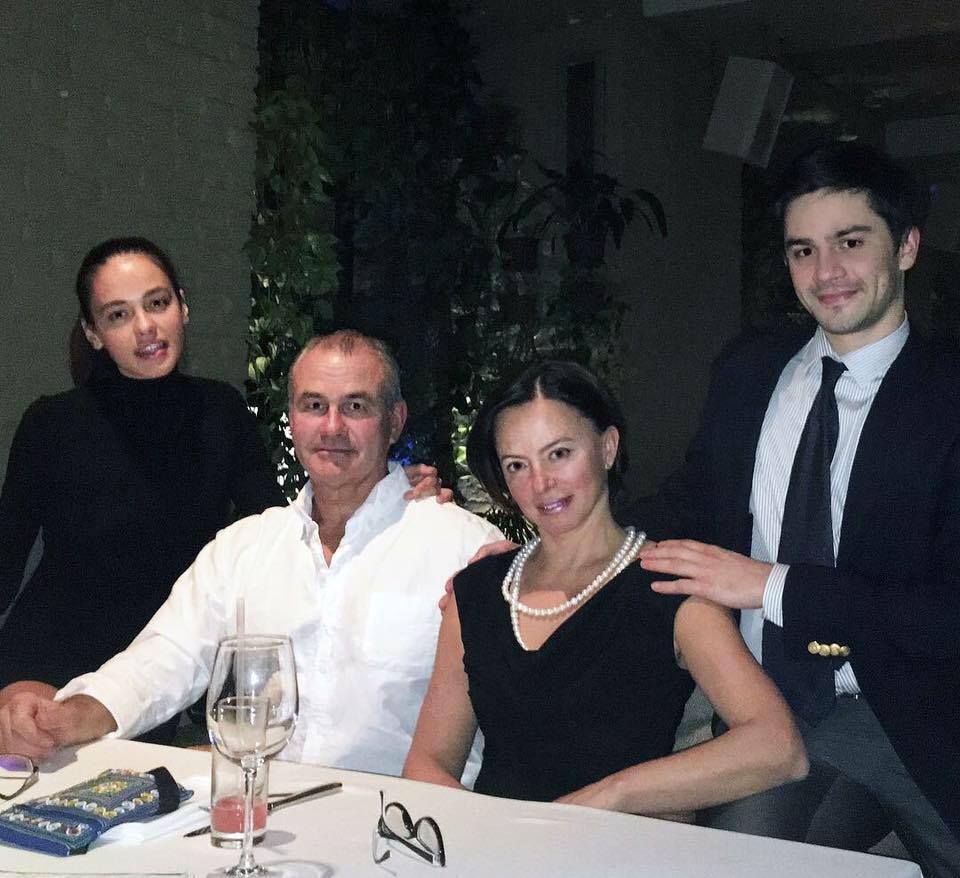
In the photo (left to right): Svetlana Pozhidaeva, her father Yuri, her mother Irina, and her brother Sergei. July 2017.
From Yuri Pozhidaev’s social media
A change of name and passport
On Jan. 29, 2020 — five months after Epstein was found dead in his Manhattan jail cell — Russian state records show a formal name change. Svetlana Yuryevna Pozhidaeva disappears from Russian public registries and is re‑entered as Sofia Yuryevna Platt. The Social Insurance number (SNILS) and individual tax number (INN) associated with both names are identical, indicating a single legal identity. Passport‑verification services list the old passport as invalid and show a new passport issued to Sofia Platt in 2020 as active.
Within weeks, entries in government and commercial records — bank deposits, medical tests at the private lab Gemotest and property registrations — begin to use the Platt name. A foreign‑travel passport in that name is issued and used to enter the United States in 2020. Border records reviewed by Explainer show that the same passport was used when Platt left Russia for good in March 2022, transiting through Doha, Qatar, shortly after Russia’s full‑scale invasion of Ukraine.
Between January 2020 and March 2022, the records show four round trips between Russia and abroad: three by air and one by car. In 2020 she flew from New York to Moscow twice — first to obtain the new passport and return to Los Angeles, later during the period when a small apartment near Paveletskaya station was registered in her name. In January 2022, border data show arrivals from Amsterdam and a same‑day land crossing at the Adler checkpoint. She remained in Russia until early March and then departed for Doha; there is no evidence in the sources Explainer reviewed that she returned to Russia after February 2022.
The name change followed a Daily Beast article in March 2019 that identified “Lana” Pozhidaeva as connected to Epstein, describing her as a model and entrepreneur linked to his finances.
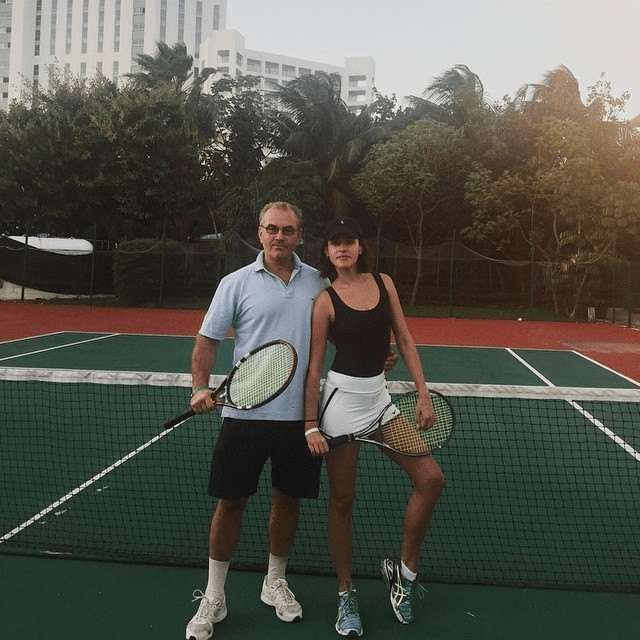
Yuri Pozhidaev with his daughter Svetlana.
From Yuri’s social‑media account.
Property and residence
Sofia Platt (formerly Svetlana Pozhidaeva) was born in Moscow in 1984 and remains officially registered at her parents’ apartment on Begovaya Street. Public records show ownership of at least two central Moscow properties: a 37.2‑square‑meter unit in the Level Paveletskaya complex, purchased in April 2020, and an apartment in the artists’ building on Karetny Ryad. Taken together with her share in the family apartment, the holdings are worth more than 45 million rubles (roughly $583,000 at current rates).
Her social accounts are private, but public reviews left under the Platt name in 2023–24 indicate a Beverly Hills address and frequent travel between the United States, Europe and the Middle East. Booking and review platforms show stays in Dubai and visits to a restaurant owned by Russian restaurateur Arkady Novikov. Leaked Russian border data and open records show no return visits to Russia after February 2022.
A family with security ties
Pozhidaeva’s father, Yuri Radomirovich Pozhidaev, is a career military translator and a graduate of the Military Institute of Foreign Languages (VIIA), an institution long associated with training for military intelligence. Family acquaintances and institute records describe a multigenerational service record: Yuri’s father and grandfather also served in state security roles.
At 20, while still a cadet, Yuri was deployed as a translator to Nahrin, Afghanistan, in 1978, more than a year before the Soviet ground invasion. A former political adviser in his unit recalled Yuri among a group of cadets flown home on the Defense Minister’s personal plane.
After VIIA, Yuri contributed to the institute’s Veterans’ Union website. His wife, Irina, is listed as a co‑founder of the union through December 2021.
In the 1990s Yuri moved into wine trade with Sergei Avdeev, a MGIMO graduate and former Soviet trade representative. Tax records show Yuri drew income from Vinnarium and from Planet of Wines Group between 2003 and 2010, working as a project manager for corporate clients. Russian military newspaper coverage in 2004 recorded Yuri and Avdeev donating wine to Afghanistan veterans. Corporate filings show Planet of Wines later accumulated large debts and that Yuri’s salary from the company ceased around 2010.
From 2018, border records show Yuri making repeated trips to Iran. During that period he appears in payroll and pension documents as connected to Technopromexport (an engineering subsidiary of Rostec) and to RZD International, a unit of Russian Railways engaged in Iranian projects. Explainer reviewed tax records showing substantial payments to Yuri from those companies in 2019 and 2021. After those contracts ended, the Social Fund lists his employer as Caspian Services, a company involved in the long‑delayed Rasht–Astara railway project between Iran and Azerbaijan.
In 2022, leaked courier records show Yuri sending at least three packages to the pensions department of the FSB’s Moscow directorate at 20/2 Bolshaya Lubyanka — the security service’s headquarters. The courier data do not identify the package contents. Under Russian law, pensions for FSB officers and their families are administered by the FSB, not by the Social Fund; investigative reporting and a classified 2001 directive cited by the Dossier Center note that officers seconded to civilian posts often remain on FSB rolls for payment and pension purposes.
Irina Pozhidaeva’s public records and commercial data show employment in the early 2000s with Ankort, a firm that produced encryption systems, later links to Pressa, an enterprise under the Presidential Administration’s Property Directorate, and a 2009–10 listing as a specialist at Lukoil Overseas Holding Ltd. The Dossier Center and external intelligence reporting have previously flagged Lukoil Overseas offices for possible intelligence interest.
Yuri Pozhidaev with his children Sergey and Svetlana on the Neva River embankment, 2015.
From Yuri’s social‑media account.
Modeling, MGIMO and early work
Pozhidaeva completed a bachelor’s degree in political science at MGIMO in 2004 and a two‑year Grande École master’s program at ICN Business School in Nancy in 2006. Her résumés on Russian job sites from 2006 list work as a project assistant at Planet of Wines and show readiness to relocate to Western Europe.
Her later public accounts of her early career are sparse. Interviews with Forbes and Voice of America describe work in finance but omit roles connected to her father’s business. A promotional video for WE Talks shows uneven English, despite her MGIMO degree.
From the late 2000s, modeling credits appear in directories and small magazines. She is listed briefly with MC2 in New York, an agency formerly run by Jean‑Luc Brunel, a French scout later accused by French and U.S. authorities of sexually exploiting models and supplying girls to Epstein. Brunel died in custody in February 2022.
A New York connection
Pozhidaeva says she first came to the United States on a modeling visa around 2010. Court records, media reports and the Department of Justice files show a sustained association with Epstein: guest lists, travel records and email exchanges link her to his circle between 2013 and 2019. Photographs from December 2010 published by the Daily Mail show a woman near Epstein’s Manhattan home with a baggage tag bearing the name “Svetlana Pozhidaeva” and an Aeroflot itinerary, though Pozhidaeva later denied the woman in those photographs was her.
In 2014, Sergei Belyakov, then a deputy economy minister and a graduate of the FSB Academy, signed a letter supporting Pozhidaeva’s O‑1 visa application. The Dossier Center has reported that Epstein requested that letter; Pozhidaeva confirmed in her Wall Street Journal interview that Epstein arranged housing for her and sought assistance from Belyakov.
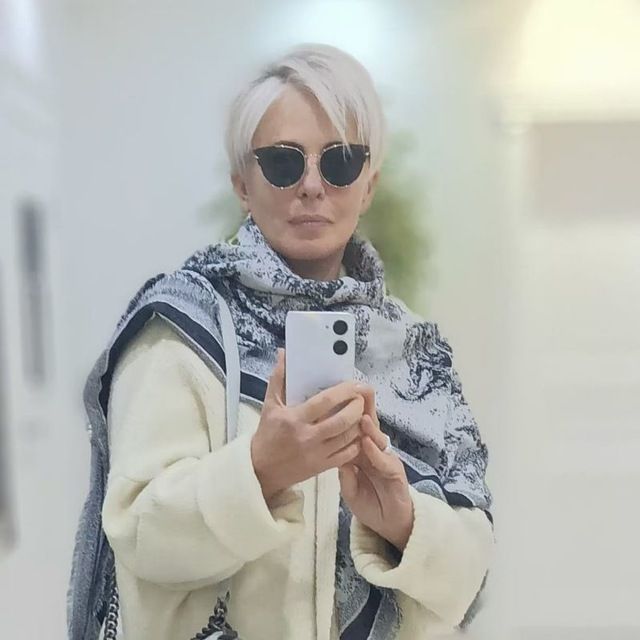
Since 2019, Irina Pozhidaeva’s Facebook page has remained online, but all posts and photos have been removed. Image from Irina Pozhidaeva’s profile in a messaging app.
WE Talks and Education Advance
From 2017 through 2019, Pozhidaeva promoted WE Talks, a forum for women entrepreneurs. Epstein’s lawyer, Darren Indyke, registered the WE Talks trademark and paid initial bills, according to corporate documents and correspondence reviewed by Explainer. In 2019, Viktoria Drokova — sister of Maria Drokova, who had served as a commissioner for the Kremlin youth movement Nashi and later became a venture investor — joined as an ambassador for the Russian program.
The Daily Beast reported that Education Advance, a foundation Pozhidaeva headed, received $55,000 from J. Epstein Virgin Islands FD Inc. Pozhidaeva acknowledged the donation and said $50,000 supported a program at MIT. The Prajnopaya Institute at MIT later confirmed receiving $50,000 and returning it after the Epstein connection became clear. After inquiries by The Daily Beast, Education Advance’s website was taken offline.
Pozhidaeva was quoted in interviews and promotional material as a champion of women entrepreneurs. Explainer’s reporting focuses on the public records and funding links; it does not draw a conclusion about her legal status as a victim. Her lawyer, Edwards Henderson, has provided letters describing her as a survivor and asking news outlets to anonymize her current identity.
A new professional life
Under the name Sofia Platt, Pozhidaeva appears to have continued working in venture finance. A 2023 Forbes item identified her as a co‑founder of Bridge Funding Global, a private fundraising platform founded with entrepreneur Emna Ghariani. Platt is listed on company materials as a co‑founder and adviser to other funds; the firms do not disclose investor identities. She maintains a low public profile and does not speak to the press.
Associates who appeared around Epstein — including Maria and Viktoria Drokova — have also moved into Silicon Valley and venture capital, changing names and residences. Explainer traced Maria Drokova’s marriage in California and subsequent venture activity; her fund does not fully disclose its investors.
Intelligence context
Former intelligence officers and investigative groups told Explainer that children of officers are sometimes useful to state services for access and information, though this is not routine. The Dossier Center and other reporting have documented cases where officials’ family members took roles that provided proximity to political or private targets.
Public reporting about Epstein’s Russian contacts rests mainly on DOJ releases — emails, flight logs and internal notes — and on investigative reporting by outlets including The New York Times, Le Monde and the Dossier Center. Those sources show Epstein seeking Russian introductions and, in one instance, a recommendation letter from Sergei Belyakov on behalf of Pozhidaeva. They do not establish a direct link between Epstein and a coordinated Russian intelligence operation.
What the records show is a pattern of overlapping networks: a woman from a family with long ties to Russian state structures moves in Epstein’s orbit in New York; she runs a project funded in part by Epstein‑linked money; after Epstein’s death she changes her name and passport and establishes a venture career in the United States. Each of those facts is documented in government records, corporate filings and contemporary reporting. How — or whether — those facts connect to broader state efforts remains an open question.